
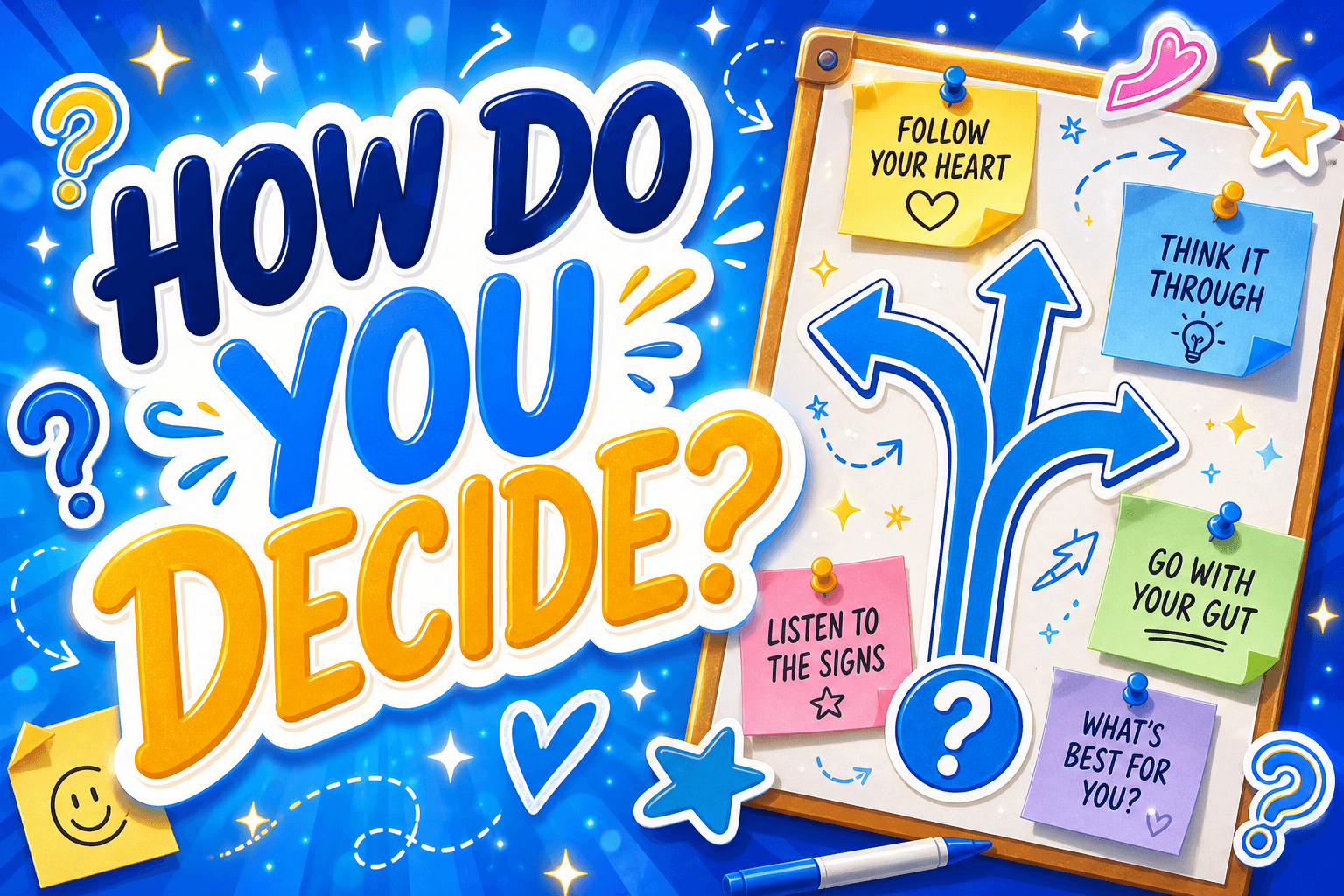
What is your decision-making style?
Find the way you move from uncertainty to action.
- 10questions
- 3 minto play
- INSTANT RESULTafter the last answer
NO ACCOUNT NEEDED
About this quiz
What is your decision-making style
Find the way you move from uncertainty to action. This page is designed as a complete introduction to the quiz, not just a start screen. It explains what the questions are trying to observe, why those observations can be useful, and how to read the result without turning it into a fixed identity. The tone stays light, but the profile is built around uncertainty, tradeoffs, group input, timing, pressure, and the signals you trust when several options all look possible.
What this quiz measures
This quiz looks at uncertainty, tradeoffs, group input, timing, pressure, and the signals you trust when several options all look possible. Instead of asking abstract questions, it uses ordinary situations because small choices are easier to answer honestly. The answers are less about proving who you are and more about noticing what you tend to protect, chase, avoid, or repeat. A preference about timing, comfort, communication, attention, or risk can reveal a pattern that a broad label would miss. The result is a practical profile that helps you spot your usual rhythm before it becomes invisible.
How the questions are designed
Each question gives several believable options rather than obvious good and bad answers. The choices are balanced so one option does not simply sound smarter, kinder, or more exciting than the others. Some questions focus on what you do first, some on what drains or motivates you, and some on the kind of outcome you find satisfying. Together they create a lightweight decision pattern and pressure response map across messy choices, competing advice, deadlines, group plans, and the moment when waiting for perfect information starts to cost more than choosing.
How to read your result
Your result should be read as a reflection prompt. It can describe a habit you already recognize, name a strength you may overlook, or point out a blind spot that appears when life gets busy. It is not a diagnosis, a professional assessment, or a rule about what you must do next. If a result feels partly right and partly incomplete, use that reaction as useful information. The most useful reading is usually specific: compare the profile with one recent real moment, not with every version of yourself at once.
Ways to use the outcome
After taking the quiz, compare the result with a recent real situation. Ask where the profile matched your behavior, where it missed something important, and what condition would help you use your strengths more deliberately. You can also share the quiz with someone close to you and compare answers, because differences often make the result more useful than agreement. A good result should give you language you can actually use: to notice when to move quickly, when to gather more context, and when another person needs to be part of the choice.
Why this topic matters
Decision style matters because every messy choice asks for a different kind of courage. Some people clear the fog by naming the strongest option, some connect the clues until the pattern appears, and some protect the trust of the group before they move. This quiz helps you notice which instinct usually takes the wheel first.
A note on accuracy and limits
What is your decision-making style is intentionally simple, but simple does not mean random. The questions are written to compare recurring preferences across several situations, then the result summarizes the strongest pattern in plain language. Because a short quiz cannot know your full history, culture, mood, or relationships, the result should not replace your own judgment. Treat it as a starting point for noticing patterns, not as proof that you always behave one way. If your answers change later, that can be meaningful too; preferences often shift with stress, confidence, responsibilities, and the people around you.